
How Launch Monitors Helped Us Stop Guessing and Start Scoring
We Wanted to Level Up Our Game—This is What Actually Worked
We’ve played golf long enough to know one thing: guessing doesn’t cut it. If you’re relying on feel alone, you’re likely stuck in the same frustrating loop—great shots one day, disaster the next. We knew we needed more than practice. We needed precision. That’s when we discovered launch monitors, and let’s say they changed the way we train, play, and understand the game.
These tools don’t just spit out numbers. They show patterns, uncover flaws, and highlight progress. They’re the bridge between guessing and knowing. For those of us serious about lowering scores—or just hitting more consistent shots—it’s a no-brainer. We’re here to walk you through what these devices do, how you can use them, and why they’re quickly becoming the not-so-secret weapon in every serious golfer’s toolkit.
What a Launch Monitor Actually Tracks (And Why It Matters)
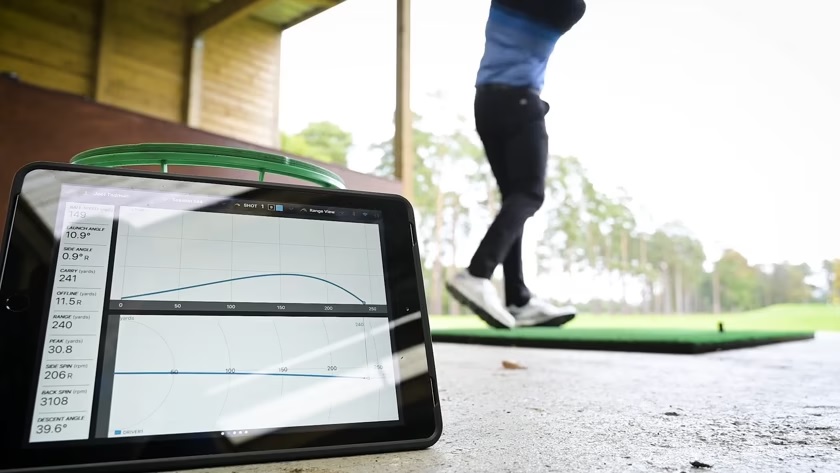
You swing, and the ball flies. But what happened in that instant? Launch monitors tell you. They give you feedback on the things you can’t see with the naked eye: club speed, ball spin, carry distance, launch angle—every detail that affects your shot.
The data can feel overwhelming at first, but it’s game-changing once you know what to look for. And the good ones keep it simple with visual feedback.
Here’s what you’ll learn from your very first session:
- How your clubface impacts direction and distance
- Why your swing speed matters more than you thought
- What adjustments improve control instantly
Once you start seeing these stats, you’ll wonder how you ever practiced without them.
Practice Feels Smarter, Not Harder
Before using a monitor, we used to grind at the range, hoping to “find the groove.” Now, we know exactly what to work on. It’s like having a coach watching every shot, without paying a coach every hour.
When you start seeing patterns in your data, your practice becomes focused. You know which club needs work. You know what swing tweaks pay off.
Some practical upsides:
- You save time by fixing issues faster
- You build confidence with real proof of progress
- You waste fewer balls (and less energy) chasing a feel
It’s practice that finally makes sense.
Home or Course? Use It Anywhere
One thing that surprised us? You don’t need a full simulator room to use one. Many launch monitors are portable and work just fine at the driving range, in your garage, or even in your backyard.
They connect to phones or tablets and track your data instantly. No bulky setup. Just you, your club, and your swing.
Ideal places to use it:
- At the range to compare clubs
- In a home net setup for winter training
- On the course to check your yardages in real-time
You can take it as seriously—or casually—as you want.
It’s Not Just for Pros Anymore
Let’s be honest, we used to think launch monitors were only for elite players or coaches. But that’s not the case anymore. The tech has come a long way, and it’s way more accessible. The good models balance price, accuracy, and ease of use.
If you’re shooting in the ’90s or ’70s, you’ll still find value. It’s not about perfection—it’s about understanding what’s happening every time you swing a club.
Why it’s worth considering:
- You get instant feedback without needing a swing coach
- Your equipment choices become more data-driven
- Your game becomes more consistent and faster
You’ll stop playing guessing games—and start playing with intention.
Why It’s the Tool That Pays for Itself
We didn’t buy a launch monitor expecting a miracle. But we did expect it to help—and it has. It’s like the difference between driving a car with and without a speedometer. Once you’ve seen the numbers, you play smarter.
You’ll avoid spending on clubs you don’t need. You’ll start practicing with direction. And over time, you’ll see the scorecard reflect the work you put in.
Want to hit better shots more often? Want your practice to lead to results finally? Then it’s time you got one.